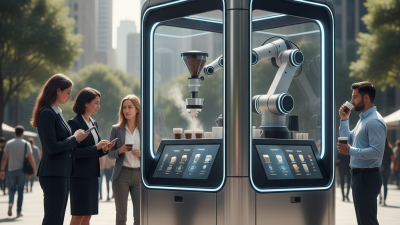
How to Choose a Robotic Coffee Bar for Your Business

Choosing a Robotic Coffee Bar is not simply a technology decision. It is a daily operating decision.

The National Coffee Association’s 2024 National Coffee Data Trends report found that 67% of American adults drank coffee the previous day. Demand is strong. However, demand alone does not guarantee a profitable automated café. Location, menu speed, maintenance, payment systems, and customer trust matter equally. A machine beside a busy office lobby needs different capabilities from one inside a university.

Café X founder Henry Hu has described the company’s approach as “a faster, more consistent way to get a great cup of coffee.” That principle is useful, but consistency has limits. Milk texture can vary. Cleaning still requires people. Customers may also miss human interaction. These details deserve honest testing.

The International Federation of Robotics reported 541,302 industrial robots were installed worldwide in 2023. This broader automation trend shows improving technical confidence, not guaranteed coffee-shop success. Industry forecasts from Grand View Research also indicate continued growth in the global coffee market, creating opportunities for compact, automated formats.

Choose carefully.

A suitable Robotic Coffee Bar should match your expected order volume, peak-hour traffic, available floor space, and staff skills. Request live demonstrations, not only polished videos. Measure drink preparation time, temperature consistency, cleaning time, ingredient waste, and recovery after errors. Ask who provides remote support at 2 a.m.

A lower purchase price may hide higher service costs. A premium system may be excessive for a quiet location. The right choice is rarely the most futuristic one. It is the system that performs reliably when the lobby is crowded, a sensor fails, and customers are waiting.
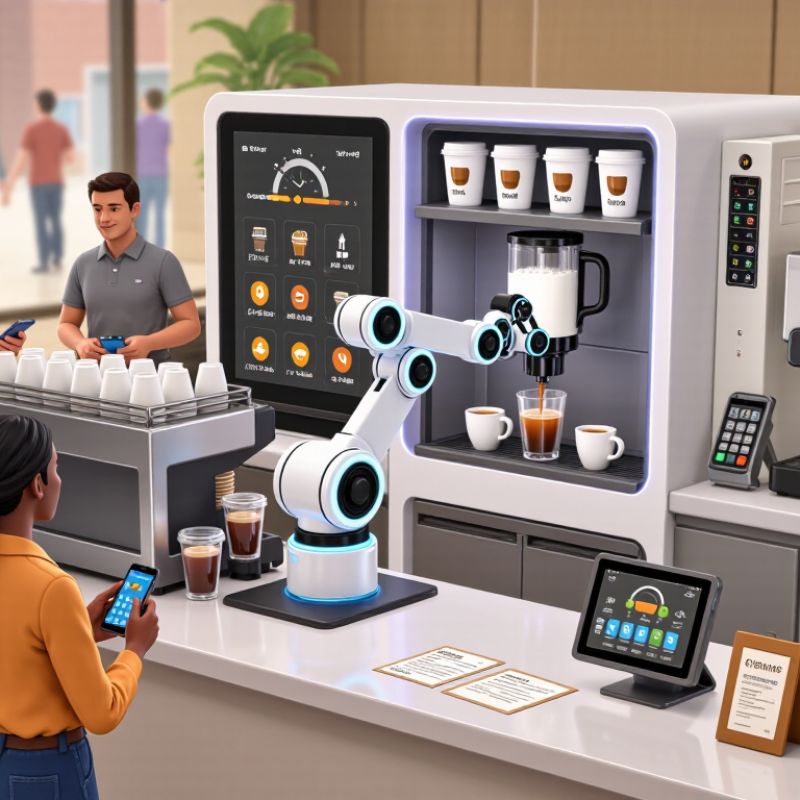
How to Choose a Robotic Coffee Bar for Your Business

Define Your Business Needs and Coffee Service Goals

Before choosing a robotic coffee bar, define what your business actually needs. A busy hotel lobby may value speed and consistent service. A small office may prioritize quiet operation, simple maintenance, and limited menu choices. The National Coffee Association’s Spring 2024 National Coffee Data Trends report found that 67% of American adults drank coffee the previous day. Demand is broad, but customer expectations differ.

Set measurable goals. Decide how many drinks you need during peak hours, which beverages matter, and how much counter space is available. The International Coffee Organization reported global coffee consumption of approximately 177.9 million 60-kilogram bags in 2023/24. That scale reflects strong demand, but it does not tell you what your customers want. Watch them directly. Count orders between 8:00 and 10:00 a.m. Notice whether customers choose espresso, milk drinks, or cold beverages.

Then examine the practical details. A robotic system should match your staff capacity, water access, power supply, cleaning routine, and service hours. Ask for documented uptime, cleaning procedures, training requirements, and response times. Do not measure success by automation alone. Faster service can still feel disappointing when the drink tastes flat or the machine stops during a queue.

Test before committing. A two-week pilot may reveal hidden costs, awkward customer interactions, or a menu that is too ambitious. Some goals may need revision. That is useful evidence.

Define Your Business Needs and Coffee Service Goals

Set measurable operating targets before choosing a robotic coffee bar. The example profile below focuses on peak capacity, service speed, menu size, daily demand, and staffing coverage.

These planning targets help businesses compare equipment capacity with real customer volume, peak-hour expectations, menu complexity, and available labor. Replace the example values with measurements from your own location.

Assess Robotic Coffee Bar Features and Automation Levels

A robotic coffee bar should be assessed by its automation level, not its futuristic appearance. International Federation of Robotics data reports 541,302 industrial robots were installed worldwide in 2023. This figure shows stronger automation adoption, but coffee service has different demands.

An assisted system may automate grinding, dosing, and payment while staff handle milk and cleaning. It suits offices with variable demand.

A semi-autonomous bar can control extraction, cup dispensing, and basic milk preparation. Look for adjustable recipes, temperature sensors, automatic rinsing, remote alerts, and simple ingredient loading.

A fully autonomous unit may manage ordering, brewing, and handoff with minimal staff support. Impressive, but not always practical.

Check the details at 8 a.m.

The National Coffee Association’s Spring 2024 report found that 67% of U.S. adults had consumed coffee in the past day. That demand makes speed valuable, yet speed alone cannot justify a complex machine. Ask for verified throughput under real conditions, not showroom demonstrations.

Measure queue time, drink consistency, cleaning minutes, and recovery after errors.

Milk systems deserve special attention because blocked lines can stop service quickly.

Payment integration, data security, emergency shutoff, and accessible maintenance panels also matter. I would test the system during a busy shift, with limited staff and ordinary ingredients. Fully autonomous operation sounds ideal, but a dependable semi-automated setup may deliver better results. The weak point is often overlooked: human oversight remains necessary when recipes, supplies, or customers change.

Compare Space, Utilities, and Installation Requirements

Choosing a robotic coffee bar starts with a measured site survey, not a glossy equipment photo. Record floor area, ceiling height, doorway width, and customer flow. A compact unit may fit beside a lobby wall, yet its service door can block an emergency route. Leave clear working space around moving parts and refill points. In busy sites, people need room to queue without touching the machine. Ask an installer to confirm these distances on a scaled floor plan. Practical review beats guesswork.

Utilities often decide feasibility. Check electrical load, outlet position, ventilation, drainage, water pressure, and network coverage. Some systems need dedicated circuits and filtered water. Others may require a drain connection or a refillable tank. Measure the distance from utilities to the proposed bar; long cable or hose runs can increase cost and maintenance risk. A quiet office may tolerate a small pump, while a hotel lobby may need lower operating noise. Confirm local building and accessibility requirements with qualified professionals. Standards vary by location.

Installation time depends on more than delivery. Ask whether the floor can carry the equipment and whether elevators, ramps, or narrow turns limit access. I once underestimated a doorway swing, and the planned position failed during a site rehearsal. That mistake changed the schedule. Require a written installation plan covering unloading, assembly, testing, staff training, and future servicing. Request realistic power and water specifications, not rounded estimates. Keep spare clearance for cleaning. A short trial run can reveal awkward refills, heat buildup, or customer congestion before the first sale.

Evaluate Costs, Capacity, Maintenance, and Staff Support

How to Choose a Robotic Coffee Bar for Your Business

A robotic coffee bar should match demand, not impress visitors. The 2024 National Coffee Data Trends report found that 67% of American adults drank coffee the previous day. That demand can still arrive in short bursts. Measure orders by 15-minute intervals, not daily averages. A unit producing 60 drinks per hour may struggle during a 20-minute morning rush. Calculate ingredient use, software fees, installation, utilities, and financing. The cheapest quote is rarely the cheapest operation.

Capacity must include drink complexity. Milk-based drinks usually slow production more than black coffee. Ask for tested output, queue handling, and recovery time after errors. Maintenance deserves equal attention. Request preventive-service schedules, spare-part availability, remote diagnostics, and a guaranteed response window. The International Federation of Robotics reports that automation depends heavily on reliable system integration and skilled support. Coffee automation is no different. One failed pump can stop sales.

Tips: Run a two-week demand test before signing. Record every interruption. Train one employee to clean, refill, and restart the system safely. Keep a manual service plan for peak periods. The National Restaurant Association’s 2024 industry report continues to identify labor and operating costs as major pressures, so staff support matters financially. A vendor’s training may sound adequate, but it may not cover night shifts or messy real-world mistakes. That gap needs honest review.

Check Safety, Compliance, Customization, and Supplier Reliability

How to Choose a Robotic Coffee Bar for Your Business

Safety and compliance should guide the purchase, not the robot’s appearance. The FDA Food Code 2022 emphasizes hand hygiene, contamination control, temperature management, and cleanable food-contact surfaces. Ask for documented sanitation procedures, emergency-stop testing, electrical certification, and allergen-control methods. Check whether the equipment meets applicable NSF/ANSI standards and local inspection requirements. A stainless-steel counter is not proof of compliance.

Look closely at customization. Can the system adjust grind size, water temperature, cup sizes, recipes, and cleaning schedules? Test it during a busy service period, with wet floors and repeated orders. According to the International Federation of Robotics, professional service robot sales approached 205,000 units in 2023. Adoption is growing, but integration quality varies. A faster machine may still create slower service if staff cannot refill ingredients safely.

Supplier reliability needs evidence. Request uptime records, response-time commitments, spare-parts availability, software update policies, and technician coverage. The National Restaurant Association projected over 1 trillion dollars in U.S. restaurant sales for 2024, making downtime expensive. A live demonstration can mislead. Ask for a site acceptance test using your cups, recipes, water, and cleaning routine. I would also budget for human oversight; full autonomy sounds attractive, yet small failures still need practical judgment.

How to Choose a Robotic Coffee Bar for Your Business - Check Safety, Compliance, Customization, and Supplier Reliability
Evaluation Dimension What to Check Practical Evidence to Request Recommended Acceptance Benchmark Business Impact Priority
Machine Safety Emergency stops, guarded moving parts, door interlocks, pinch-point protection, safe restart behavior, and access control for maintenance areas. Risk assessment, safety manual, emergency-stop test procedure, guarding drawings, and an on-site demonstration. All accessible hazards are identified and controlled; the system stops safely during an emergency and does not restart unexpectedly. Reduces the risk of injury, equipment damage, and operational downtime. Critical
Electrical and Machinery Compliance Electrical protection, grounding, overcurrent protection, machinery safeguards, control-system documentation, and local installation requirements. Declaration of conformity or equivalent documentation, electrical schematics, inspection records, and installation instructions. Documentation matches the exact configuration supplied and is suitable for the country or region where the unit will operate. Helps prevent approval delays, insurance issues, and unsafe installation conditions. Critical
Food-Contact Hygiene Food-contact materials, cleanability, drainage, condensation control, cross-contamination prevention, and access to internal surfaces. Material declarations, cleaning schedule, sanitation instructions, food-contact compliance statements, and hygiene inspection checklist. Food-contact surfaces are non-porous, durable, corrosion-resistant, and accessible for routine cleaning without specialized tools. Supports food safety, consistent product quality, and easier daily sanitation. Critical
Water and Waste Management Potable-water connection, filtration, leak detection, wastewater routing, waste-container capacity, and overflow protection. Plumbing diagram, water-quality requirements, filter specifications, leak-test record, and waste-handling procedure. The installation includes a documented water and drainage plan, with alarms or safeguards for leaks and full waste containers. Limits flooding, hygiene problems, unpleasant odors, and unexpected service interruptions. High
Fire and Thermal Protection Heating-element protection, temperature monitoring, ventilation, combustible-material clearance, and fire-response procedures. Thermal test results, temperature-limit settings, ventilation requirements, fire-risk assessment, and maintenance records. Abnormal temperature conditions trigger a controlled shutdown or alarm, and installation clearances are clearly specified. Reduces fire risk and protects the surrounding premises and equipment. Critical
Product Consistency Control of dose, grind, water temperature, extraction time, milk quantity, cup placement, and recipe repeatability. Recipe logs, calibration procedure, sample output records, quality-control checklist, and acceptance-test results. Core recipes remain within agreed tolerances during repeated tests under normal operating conditions. Improves customer experience, reduces waste, and simplifies staff training. High
Customization Menu size, cup dimensions, ingredient options, payment integration, user interface, exterior finishes, lighting, and accessibility features. Configuration matrix, interface mock-ups, sample recipes, integration specifications, and written change-control terms. Required menu, payment, branding, and site-specific features are confirmed in writing before production. Allows the coffee bar to fit the site, target customers, and operating model. High
Capacity and Peak Demand Average service rate, peak-hour throughput, ingredient refill frequency, cleaning pauses, and recovery time after faults. Capacity test under representative conditions, queue assumptions, refill records, and performance limits. Tested throughput meets the site’s expected peak demand without compromising safety, recipe quality, or cleaning requirements. Prevents queues, lost sales, customer frustration, and overloading of the system. High
Reliability and Uptime Failure history, preventive-maintenance needs, fault recovery, component life, remote monitoring, and spare-parts availability. Reference-site data, service logs, mean-time-between-failure information, uptime definition, and escalation procedure. Uptime and response targets are clearly defined, measured, and supported by a documented recovery plan. Protects revenue and reduces disruption during trading hours. Critical
Supplier Support Installation, commissioning, operator training, technical support hours, response times, field-service coverage, and spare-parts logistics. Service-level agreement, support contact process, training agenda, parts list, warranty terms, and maintenance pricing. Support responsibilities, response times, exclusions, and ownership of corrective work are written into the contract. Shortens downtime and clarifies accountability after installation. Critical
Total Cost of Ownership Purchase or lease cost, installation, utilities, consumables, cleaning supplies, software fees, service, parts, and disposal. Five-year cost model, utility assumptions, consumable usage rates, service schedule, and end-of-life terms. All recurring and one-time costs are itemized, with assumptions that can be checked during the pilot period. Improves investment decisions and prevents unexpected operating expenses. High
Cybersecurity and Data Protection Network separation, account permissions, software updates, encryption, payment-data handling, logs, and remote-access controls. Security architecture, update policy, access-control procedure, data-processing terms, and incident-response process. Remote access is controlled and auditable; payment and customer data are handled according to applicable requirements. Reduces exposure to service disruption, unauthorized access, and data-protection incidents. High
Site Compatibility Floor loading, footprint, ceiling height, access route, power supply, water, drainage, ventilation, noise, and ambient temperature. Site-survey checklist, utility-load schedule, dimensional drawings, noise data, and delivery or installation plan. Every utility, clearance, access, and environmental requirement is verified before the purchase order is released. Prevents costly modifications, installation delays, and unsuitable placement. Critical
Pilot and Acceptance Testing Trial duration, recipe accuracy, safety functions, cleaning workflow, peak-load operation, fault recovery, and staff usability. Signed factory-acceptance and site-acceptance test plans, issue log, training record, and handover checklist. The supplier resolves all critical defects before final acceptance, and performance is tested in the intended operating environment. Reduces implementation risk and provides objective purchase criteria. Critical