2026 Best Robotic Barista Coffee Machine for Businesses?
Choosing the 2026 Best Robotic Barista Coffee Machine for Businesses requires more than comparing touchscreen features. It requires evidence from real service conditions. The International Coffee Organization’s Coffee Development Report highlights coffee’s growing economic importance and rising pressure on supply, costs, and sustainability. Meanwhile, World Coffee Portal reports continued expansion across branded coffee shop markets, increasing demand for faster and more consistent preparation.
A Robotic Barista Coffee Machine can support this demand in offices, hotels, hospitals, transport hubs, and retail locations. Picture a morning queue: cups align automatically, milk is dosed consistently, and staff monitor orders instead of repeating every manual step. That sounds efficient. It is not always simple.
Operators must examine hourly capacity, drink accuracy, cleaning time, noise, ingredient storage, payment integration, and technical support. The Specialty Coffee Association’s research on coffee quality reinforces an important point: repeatability matters, but extraction quality still depends on fresh beans, water, calibration, and maintenance. Automation cannot rescue poor inputs.
Real results vary.
This guide compares leading machines through a business-focused lens. It considers total ownership cost, staff workload, customer experience, uptime, and measurable return on investment. Data from industry reports can reveal market direction, but vendor claims still require practical verification. A machine may advertise high output yet struggle during a busy breakfast period. That gap deserves attention.
The strongest choice may not be the most advanced model. It may be the machine that delivers reliable coffee, simple cleaning, transparent service costs, and stable performance after months of daily use.
What Defines a Robotic Barista and Its Role in Commercial Coffee Service
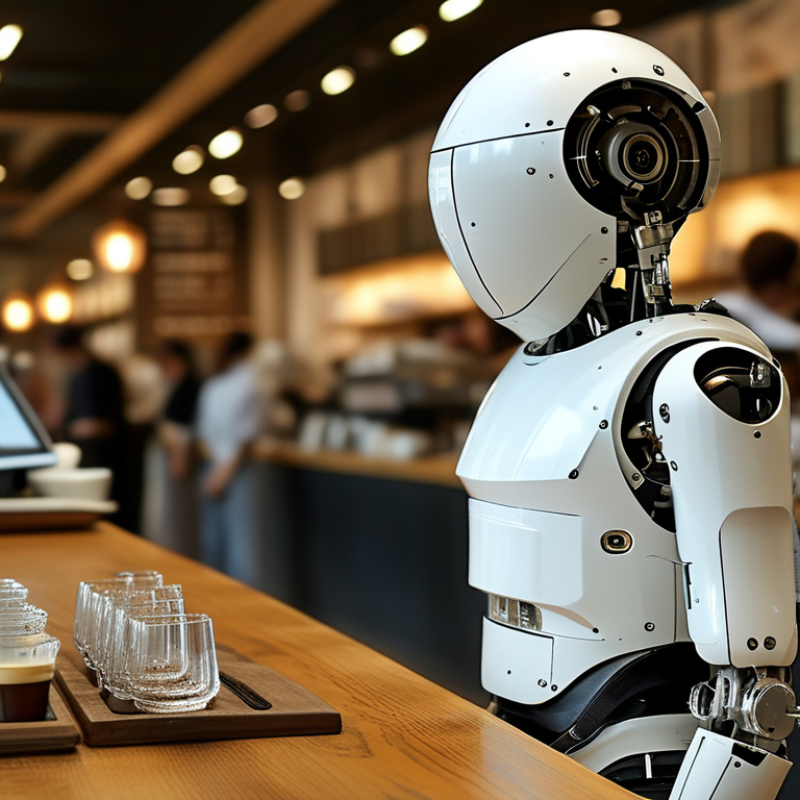
In 2026, a robotic barista is more than a machine that dispenses coffee. It combines automated dosing, grinding, brewing, milk handling, payment, and cleaning routines. Sensors monitor temperature, pressure, cup position, and ingredient levels. Consistency is the promise. Yet automation does not equal craftsmanship. A commercial system becomes useful when it delivers repeatable drinks during busy service, with limited staff intervention.
From my operational perspective, the strongest role is workflow support, not human replacement. A trained employee can load ingredients, check calibration, handle exceptions, and speak with customers. The machine can prepare a latte while staff manage queues, food orders, or room service. That division matters in offices, hotels, and other high-traffic settings. It also creates measurable records, including drink times, cleaning alerts, and ingredient waste. These records help managers test whether speed improves without lowering quality.
The best commercial choice depends on volume, menu complexity, maintenance access, and local safety requirements. A compact unit may suit a small lobby, while a high-throughput model needs stronger water, power, and waste systems. Milk texture can still vary. Cups may misalign. Staff may ignore alerts during rushes. Those failures are not reasons to reject robotics, but they demand training, manual checks, and honest performance trials. A reliable evaluation should compare total labor, cleaning time, downtime, drink consistency, and customer feedback over several weeks. The “best” robotic barista is not the most futuristic machine; it is the one that fits the service reality.
How the $1 Trillion U.S. Restaurant Market Shapes Automation Demand
2026 Best Robotic Barista Coffee Machine for Businesses?
The U.S. restaurant market is pushing automation from novelty toward operational necessity. The National Restaurant Association’s 2024 State of the Restaurant Industry report projected more than $1 trillion in sales and 15.7 million jobs. That scale creates intense pressure on labor, speed, and consistency. A robotic barista can support peak periods when queues form beside a breakfast counter. It can repeat measured recipes, reduce spills, and keep service moving.
Still, automation demand is not only about replacing staff. The Bureau of Labor Statistics reported persistent employment growth in food preparation and serving occupations, while operators continue facing recruitment and retention challenges. A machine may handle espresso extraction, milk dispensing, payment prompts, and basic cleaning alerts. Employees can focus on hospitality, food safety checks, and unusual customer requests. That division matters.
The numbers need careful reading. A high-volume site may justify automation through faster service and longer operating hours. A quiet office lobby may not. Operators should compare hourly labor savings with installation, maintenance, ingredient waste, software fees, and downtime. The FDA Food Code also requires disciplined temperature control, sanitation, and equipment procedures. Technology does not remove those duties. It can fail during the morning rush. That is uncomfortable, but realistic. Reports from the International Federation of Robotics show growing automation adoption across service environments, yet coffee operations remain highly location-dependent. The best 2026 system will be measurable, maintainable, and supported by trained people.
2026 Best Robotic Barista Coffee Machine for Businesses?
U.S. restaurant industry sales show why businesses are investing in labor-saving automation and unattended beverage service.
The U.S. restaurant industry recovered from the pandemic-related decline and exceeded $1 trillion in annual sales by 2024. As operating costs, labor availability, and service-speed expectations remain important business challenges, robotic barista systems may become increasingly attractive for high-volume locations, offices, hotels, hospitals, airports, and other commercial venues.
Source: National Restaurant Association, State of the Restaurant Industry reports. Figures are rounded nominal U.S. restaurant industry sales in billions of dollars; 2024 is a reported industry estimate.
How to Compare Output, Uptime, Labor Savings, and Payback Periods
2026 Best Robotic Barista Coffee Machine for Businesses?
Compare output before features. The National Coffee Association’s Fall 2024 National Coffee Data Trends report found that 67% of American adults drank coffee the previous day. That demand does not guarantee sales. Measure drinks per hour during the busiest 30-minute period, not the advertised maximum. A practical test includes milk drinks, payment time, cleaning, and queue recovery. Record cup temperature and remake rates. Small errors become expensive at 300 drinks daily.
Uptime deserves equal attention. The International Federation of Robotics reported nearly 205,000 professional service robots sold globally in 2023, showing wider commercial adoption. Ask for logged uptime, fault-recovery time, preventive maintenance hours, and technician response targets. A machine operating at 96% uptime may outperform a faster unit running at 85%. Labor savings require evidence. Compare paid minutes removed from preparation, cleaning, and order handling, then subtract supervision and consumables. The U.S. Bureau of Labor Statistics provides local wage data, which is more reliable than generic savings claims.
Use this payback formula: installation cost divided by monthly net savings. Include financing, service contracts, wasted ingredients, and seasonal demand. A $30,000 system saving $3,000 monthly suggests a ten-month payback. That looks attractive. It may be wrong. Test three demand levels, and include two unexpected service calls. Also measure sales added during rush periods; labor reduction alone can understate value. Teams should review the figures after 30, 60, and 90 days, because real queues rarely behave like demonstrations.
2026 Best Robotic Barista Coffee Machine for Businesses? — How to Compare Output, Uptime, Labor Savings, and Payback Periods
| System profile |
Typical use case |
Rated output
(cups/hour) |
Recommended sustained output
(cups/hour) |
Target technical uptime |
Operator labor saved
(hours/day) |
Approx. installed cost
(USD) |
Typical payback period |
Best fit |
| Compact automated counter |
Office, clinic, small hotel |
40–60 |
25–40 |
96–98% |
2–4 |
$45,000–$85,000 |
18–30 months |
Low-to-moderate demand |
| Standard robotic kiosk |
Retail, transit, university |
80–120 |
50–80 |
95–98% |
4–7 |
$85,000–$150,000 |
14–24 months |
Regular daytime traffic |
| High-throughput dual-station kiosk |
Shopping center, airport, large venue |
140–200 |
90–140 |
94–97% |
6–10 |
$150,000–$260,000 |
16–28 months |
Peak-period demand |
| Unattended micro-market unit |
Workplace, residential, hospital |
50–90 |
30–60 |
96–99% |
3–6 |
$60,000–$125,000 |
15–27 months |
Limited on-site staffing |
| Premium customizable bar |
Corporate campus, hotel, premium retail |
70–110 |
45–75 |
95–98% |
4–8 |
$110,000–$210,000 |
20–36 months |
Premium drinks and customization |
How to interpret the benchmarks:
- Output figures are planning ranges for commercial automated coffee systems; sustained output is normally lower than the short-term rated maximum.
- Technical uptime means the percentage of scheduled operating time when the system is available, excluding planned cleaning and replenishment.
- Labor savings assume the machine replaces approximately 0.5–1.0 full-time-equivalent service roles during operating hours, while staff still handle replenishment, cleaning, customer support, and maintenance.
- Payback estimates assume 250 operating days per year, an average contribution margin of $2.00–$3.50 per beverage, and labor savings of $18–$25 per hour. Actual results depend on sales volume, rent, financing, service fees, utilities, consumables, and local labor costs.
- Before purchase, request verified 90-day uptime records, peak-hour throughput tests, preventive-maintenance requirements, response-time commitments, and total cost of ownership.
What Food-Safety Rules Govern Robotic Coffee Machines in Businesses
2026 Best Robotic Barista Coffee Machine for Businesses?
For businesses choosing a robotic barista coffee machine in 2026, food safety must come before speed. Rules vary by jurisdiction. A robotic unit is still a food establishment appliance, not an exemption. Local health departments may require plan review, permits, inspection, and a certified food protection manager. Operators should verify requirements before installation, especially where milk, plant-based drinks, ice, or ready-to-drink beverages are served.
The machine should use potable water and smooth, non-absorbent, food-contact materials. Surfaces need access for cleaning and sanitizing, including nozzles, drip trays, milk lines, hoppers, and nearby touchscreens. Cold milk generally needs controlled refrigeration, while hazardous foods must remain within local temperature limits. Use calibrated thermometers, not the machine display alone. A small temperature log can reveal a failing cooler before customers do.
A written cleaning schedule should identify the task, chemical, concentration, contact time, employee, and completion time. Staff still need handwashing, glove rules, allergen controls, and training, even when a robot pours the drink. Keep maintenance records and replace worn seals promptly. In practice, automation reduces repetitive handling but creates blind spots. I would not trust a “self-cleaning” label without observing the rinse cycle and checking residue. Inspectors may also ask for sanitation procedures, water filters, waste handling, and recall documentation.