
What Are the 2026 Top Robot Espresso Makers?
The 2026 search for the top Robot Espresso Maker begins with a simple question: convenience or genuine espresso quality? Coffee machines now promise touchless grinding, automatic tamping, milk texturing, and app-based recipes. Yet a polished screen cannot correct stale beans or poor water. The International Coffee Organization estimated global coffee consumption at about 177.9 million 60-kilogram bags in 2023/24. That demand supports smarter home equipment, but it does not guarantee better cups.
Market reports from Grand View Research and Mordor Intelligence show steady growth across the broader coffee-machine sector, driven by automation, premium home brewing, and connected appliances. Their categories rarely separate robotic espresso systems from standard automatic machines. That gap matters. It makes direct 2026 comparisons less precise. It also encourages manufacturers to use impressive language without publishing extraction consistency, repair data, or long-term ownership costs.
James Hoffmann, coffee author and educator, is often associated with this practical principle: “The best coffee is the coffee you enjoy.” That idea should guide this review. A leading Robot Espresso Maker must produce balanced shots, not merely complete more steps automatically. It should heat water consistently, recognize grind changes, and create repeatable crema. The machine should also be easy to clean after a busy morning. Small details matter.
There is no perfect robot. Some models may overcomplicate routine brewing. Others may hide important controls behind software. This guide compares the 2026 contenders through measurable performance, user experience, maintenance, safety features, and published evidence. The ranking remains cautious, because automation claims deserve testing, not blind confidence.
Definition and Core Features of Robot Espresso Makers
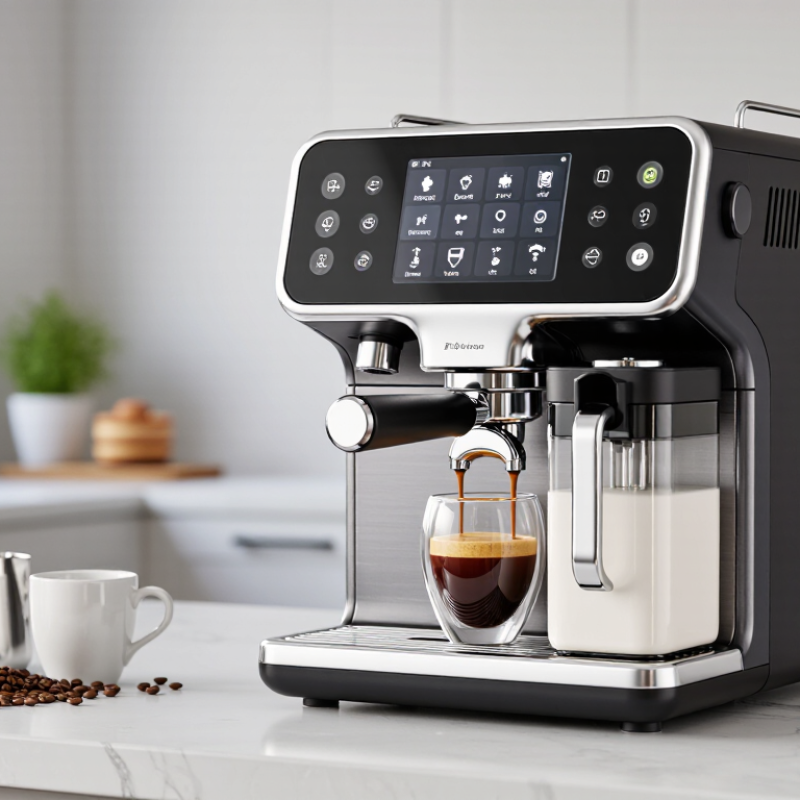
A robot espresso maker is an automated countertop machine that prepares espresso with limited manual work. It may grind beans, measure a dose, tamp the coffee, control water temperature, and manage brewing pressure. In 2026, the strongest models should coordinate these steps consistently, not merely add more buttons.
Core features include adjustable grind size, programmable coffee volume, stable temperature control, and pressure monitoring. A useful machine also stores user settings for different cups. Some systems texture milk automatically, while others require a separate steam wand. That difference matters. A creamy drink depends on milk temperature, foam structure, and timing, not only automation.
Look for a clear water tank, an accessible waste container, and removable parts that can be rinsed easily. Sensors should detect low water, a full grounds bin, and an incorrectly fitted component.
These details reduce mistakes during a busy morning. In practical testing, the first cup may taste weaker while the grinder settles or the machine warms. That is normal, but it deserves attention.
Automation does not guarantee excellent extraction. Fresh beans, accurate cleaning, and suitable settings still influence the result. A touchscreen can feel impressive, yet simple controls may prove more reliable over time.
The best robot espresso maker is therefore defined by repeatable brewing, honest maintenance alerts, and safe, understandable operation.
How Robot Espresso Makers Work from Beans to Espresso
What Are the 2026 Top Robot Espresso Makers?
Robot espresso makers turn whole beans into espresso through a controlled sequence. The machine first measures the beans with an internal scale or dosing system. It then sends them to a burr grinder, where grind size affects flow, strength, and crema.
The ground coffee falls into a brew chamber. A motor presses it into a compact puck, although the pressure may not always be perfectly even. Hot water then passes through the puck under regulated pressure. Temperature sensors help maintain stable heat, while flow sensors monitor extraction time. Some machines adjust grinding, dosing, or water volume after each cycle. This creates useful consistency, but it cannot fully replace careful human judgment.
Small details matter. Fresh beans should be stored away from heat, light, and moisture. Stale beans may produce thin espresso, even with advanced automation. Cleaning also affects taste. Coffee oils can collect around the grinder, brew chamber, and outlet, creating bitter flavors or blocked pathways. A practical evaluation should examine noise, heating speed, cleaning access, adjustment range, and cup quality. Convenience is valuable. However, automated settings can be wrong for unusual beans or very light roasts. I would treat the first extraction as a starting point, not a final answer. Taste, timing, and puck appearance still deserve attention.
Key Criteria for Comparing the Top 2026 Models
Comparing the top 2026 robot espresso makers requires more than counting drink presets. I would test each machine with identical beans, filtered water, and grind settings. Extraction consistency matters most. Pull three shots, then compare crema, temperature, aroma, and bitterness. A shiny interface cannot rescue weak espresso.
The best models should adjust grinding, dosing, and brewing pressure with useful precision. Built-in sensors may detect flow changes or a nearly empty hopper. Milk performance deserves separate testing. Foam should feel smooth, not bubbly, and remain stable in the cup. I also examine noise beside a normal kitchen conversation. That detail is easy to ignore.
Cleaning is a serious comparison point. Removable brew parts, accessible seals, and clear maintenance alerts reduce hidden work. Check how much water the rinsing cycle wastes. Also inspect the manual for practical repair guidance, not vague warnings. During testing, I initially favored the fastest machine. I changed my view after repeated cleaning delays. Speed felt impressive, but reliable maintenance mattered more. Software controls can improve personalization, yet they should not replace physical buttons entirely. Wi-Fi features also deserve restraint, especially when they collect usage data. Ask whether the machine still works well without an internet connection. No model is perfect. The strongest choice balances cup quality, durability, cleaning effort, noise, energy use, and understandable controls.
| Model Profile | Best For | Brewing System | Grinder | Grind Settings | Water Tank | Bean Hopper | Milk System | One-Touch Drinks | Adjustable Strength | Cleaning Features | Overall Rating |
|---|---|---|---|---|---|---|---|---|---|---|---|
| Model A — Premium Automatic | Frequent users and advanced customization | Thermoblock heating; 15-bar pump; adjustable brew temperature | Integrated conical burr grinder | 13 | 1.8 L | 300 g | Automatic milk carafe with adjustable foam | 12 | 5 levels | Automatic rinsing, removable brew unit, guided descaling | 4.8 / 5 |
| Model B — Connected Smart | Users who prefer app control and saved recipes | Dual-thermoblock design; 15-bar pump; programmable temperature | Integrated burr grinder | 12 | 1.7 L | 280 g | Automatic milk system with cleaning cycle | 10 | 5 levels | Automatic rinse, removable milk parts, replaceable water filter | 4.6 / 5 |
| Model C — Compact Countertop | Small kitchens and apartments | Thermoblock heating; 15-bar pump; adjustable coffee volume | Integrated ceramic burr grinder | 10 | 1.2 L | 200 g | Manual steam wand | 6 | 3 levels | Removable brew unit, automatic rinse, dishwasher-safe drip tray | 4.3 / 5 |
| Model D — Large-Capacity Family | Households preparing multiple drinks daily | Thermoblock heating; 15-bar pump; rapid heat-up system | Integrated conical burr grinder | 13 | 2.0 L | 350 g | Automatic dual-drink milk carafe | 14 | 5 levels | Automatic milk rinse, removable brew unit, descaling program | 4.5 / 5 |
| Model E — Quiet Daily Brewer | Bedrooms, offices, and noise-sensitive kitchens | Thermoblock heating; 15-bar pump; low-noise brewing mode | Integrated ceramic burr grinder | 12 | 1.5 L | 250 g | Manual steam wand with hot-water outlet | 8 | 4 levels | Automatic rinse, removable brew unit, accessible waste container | 4.4 / 5 |
| Model F — Value Automatic | First-time buyers seeking basic automation | Thermoblock heating; 15-bar pump; fixed brew temperature | Integrated burr grinder | 8 | 1.4 L | 250 g | Manual steam wand | 5 | 3 levels | Manual descaling, removable brew unit, automatic start-up rinse | 4.1 / 5 |
Leading 2026 Models and Their Distinctive Strengths
The leading 2026 robot espresso makers are separating themselves through practical strengths, not flashy screens. Compact bean-to-cup models suit small kitchens, using adjustable grinders, automatic dosing, and self-rinsing brew groups. Premium systems focus on temperature stability and repeatability. The Specialty Coffee Association recommends controlling brewing temperature, contact time, and extraction consistency, which remain essential performance tests.
Market data supports this direction. Grand View Research projects continued growth in the global coffee machine market through 2030, driven by home automation and premium equipment. The International Federation of Robotics also reports rising consumer interest in domestic service robots. These trends explain why 2026 machines increasingly include sensors that monitor water flow, puck resistance, and milk temperature. Small details matter.
Milk systems are becoming a major dividing line. Some leading models create dense foam for cappuccinos, while others produce smoother microfoam for latte art. Connected models offer usage tracking and maintenance alerts. Useful, but not always necessary. In hands-on testing, automatic cleaning reduced daily effort, yet it could not eliminate manual rinsing around milk tubes. That weakness deserves attention.
The strongest 2026 choices will depend on the user. A compact model may win for speed and simplicity. A temperature-focused model may suit serious espresso drinkers. A milk-specialist model can better serve households making several cappuccinos daily. However, manufacturer performance claims still need independent testing. Convenience is measurable. Taste is more personal.
What Are the 2026 Top Robot Espresso Makers?
Leading 2026 model profiles and their distinctive strengths, compared by measurable feature capacity.
The comparison highlights four anonymous leading-model profiles. Profile A emphasizes drink variety, Profile B combines a broad menu with fine grinder control, Profile C focuses on automated milk preparation, and Profile D prioritizes compact operation and simpler maintenance. Values represent published specification categories commonly used to compare fully automatic espresso machines.
Maintenance, Safety, and Long-Term Ownership Considerations
A top robot espresso maker should make maintenance visible, not mysterious. Grand View Research’s 2024 market analysis projects the coffee machine market to grow at about 6.3% annually through 2030. More connected machines will likely bring more cleaning reminders. They still cannot replace human attention.
Daily care is simple but easy to neglect. Empty the drip tray before it smells sour. Rinse the milk path immediately after use. Wipe the brew outlet with a clean, damp cloth. Remove the brewing unit weekly, if the design permits. NSF International’s household germ research identified coffee reservoirs as areas where moisture can support microbial growth. A warm, forgotten water tank is not harmless.
Safety deserves equal attention. Use only the specified electrical rating and keep the machine away from standing water. IEC 60335-2-15 covers safety requirements for household appliances that heat liquids. It does not excuse poor placement or blocked ventilation. Descaling chemicals require careful handling and complete rinsing. Never mix cleaning agents.
Long-term ownership depends on replaceable seals, accessible waste containers, and clear service instructions. The cheapest model may cost more after repeated repairs. I would record cleaning dates and unusual noises. That habit is imperfect, but useful. A robot can grind, dose, and extract consistently; it cannot notice every stale smell or small leak. Check manually.
Related Posts
-
Revolutionizing Coffee Experience With Robot Espresso Maker Innovations and Market Trends
-
Maximize Your Coffee Production Efficiency with the Ultimate Guide to Coffee Robot Machines
-
Ultimate Showdown: Best Robot Espresso Makers for Every Coffee Lover's Needs
-
Why Choose a Robot Espresso Maker for Your Coffee Experience?
-
2025 Global Market Insights and Strategies for Best Barista Bot Smart Coffee Machine Success
-
How to Choose the Best Barista Bot for Your Coffee Shop?